The warmth and comfort
of natural materials make tatami attractive
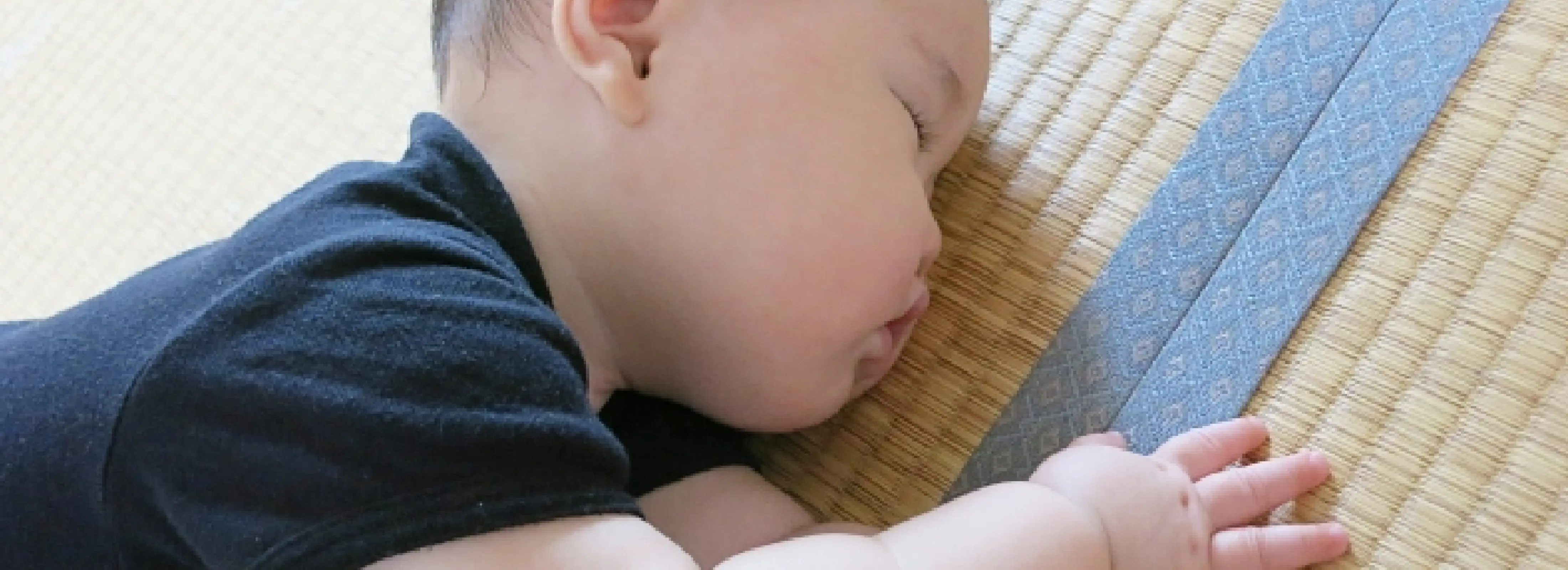
Tatami, a traditional Japanese culture, has been loved by many people for its beauty and comfort.
Tatami not only harmonizes with various spaces such as Japanese-style rooms and living rooms and creates a
Japanese atmosphere, but also soothes our hearts with its
unique softness and comfortable sitting feeling.
One of the charms of tatami is the use of natural materials
Tatami has excellent air permeability and is ideal for regulating humidity and Motiontaining a comfortable indoor
environment. It also has high heat insulation properties, making it a perfect match for underfloor heating. Soft
Tatami wraps warmth around your feet, warming your entire body even in the coldest winter season. Tatami also has
health benefits as it absorbs and releases moisture and maintains an appropriate level of humidity. Tatami's antibacterial
properties inhibit the growth of house dust mites, creating an ideal environment for both comfort and health.
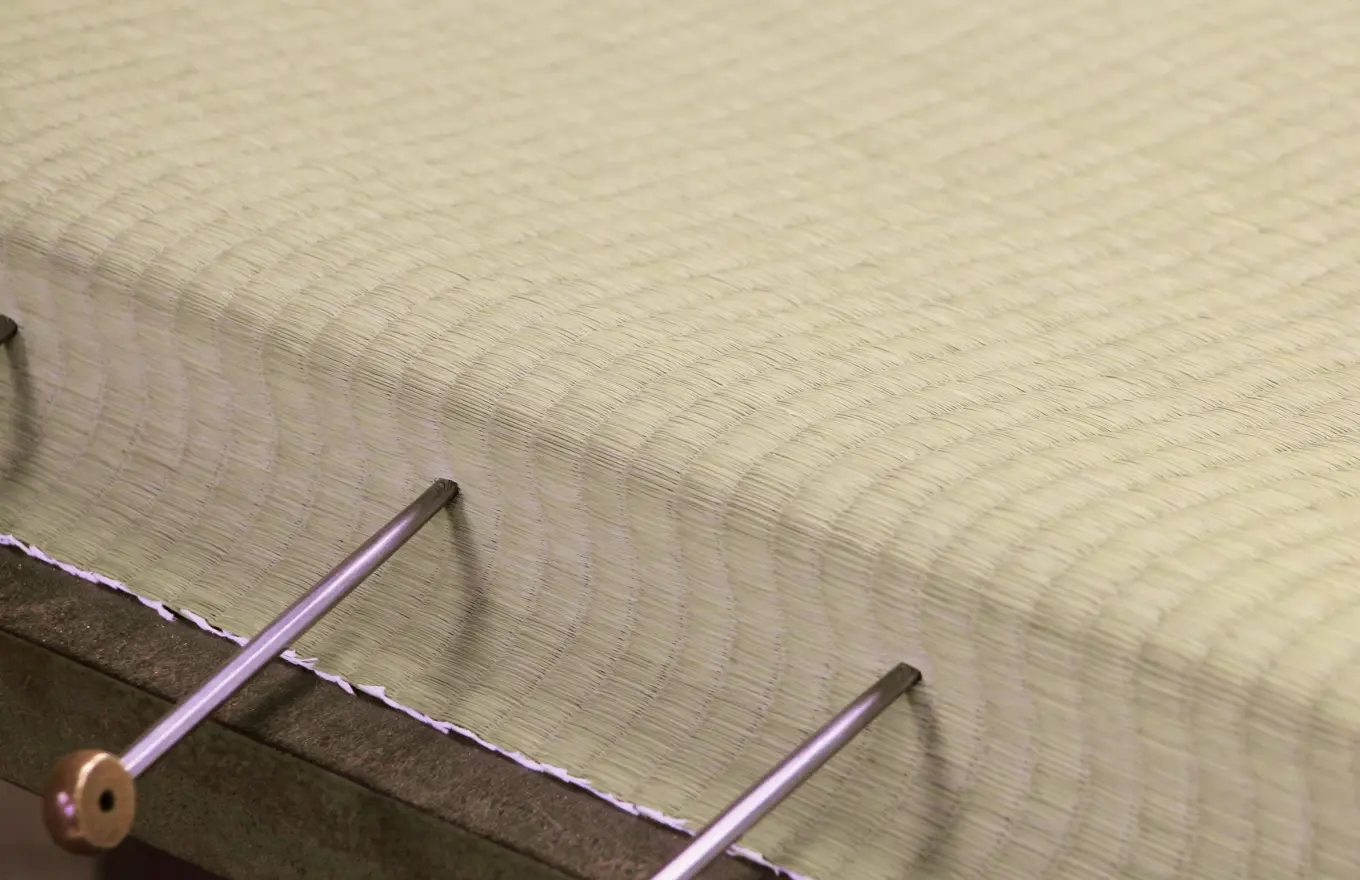
Tatami mat omote (OMOTE)
Tatami-omote is woven from dried rushes, the main material used for tatami mats, with rushes as the weft
and hemp or cotton yarns as the warp.
Currently, the most common weaving method is called Morome Omote,
in which two warp threads are woven into each stitch.
For edge-less tatami, a weave called Meseki Omote, in
which one warp thread is woven into each stitch, is used. Unlike tatami mats, natural materials are still
commonly used for tatami-omote, but there are also tatami-omote made of woven synthetic fibers and sheet-type
tatami-omote made of synthetic resin with tatami patterns stamped on the surface. As tatami-omote wears out over
time, it is recommended to remove it from the tatami and turn it over once every three to five years or replace
it with a new one (mote-mawashi).
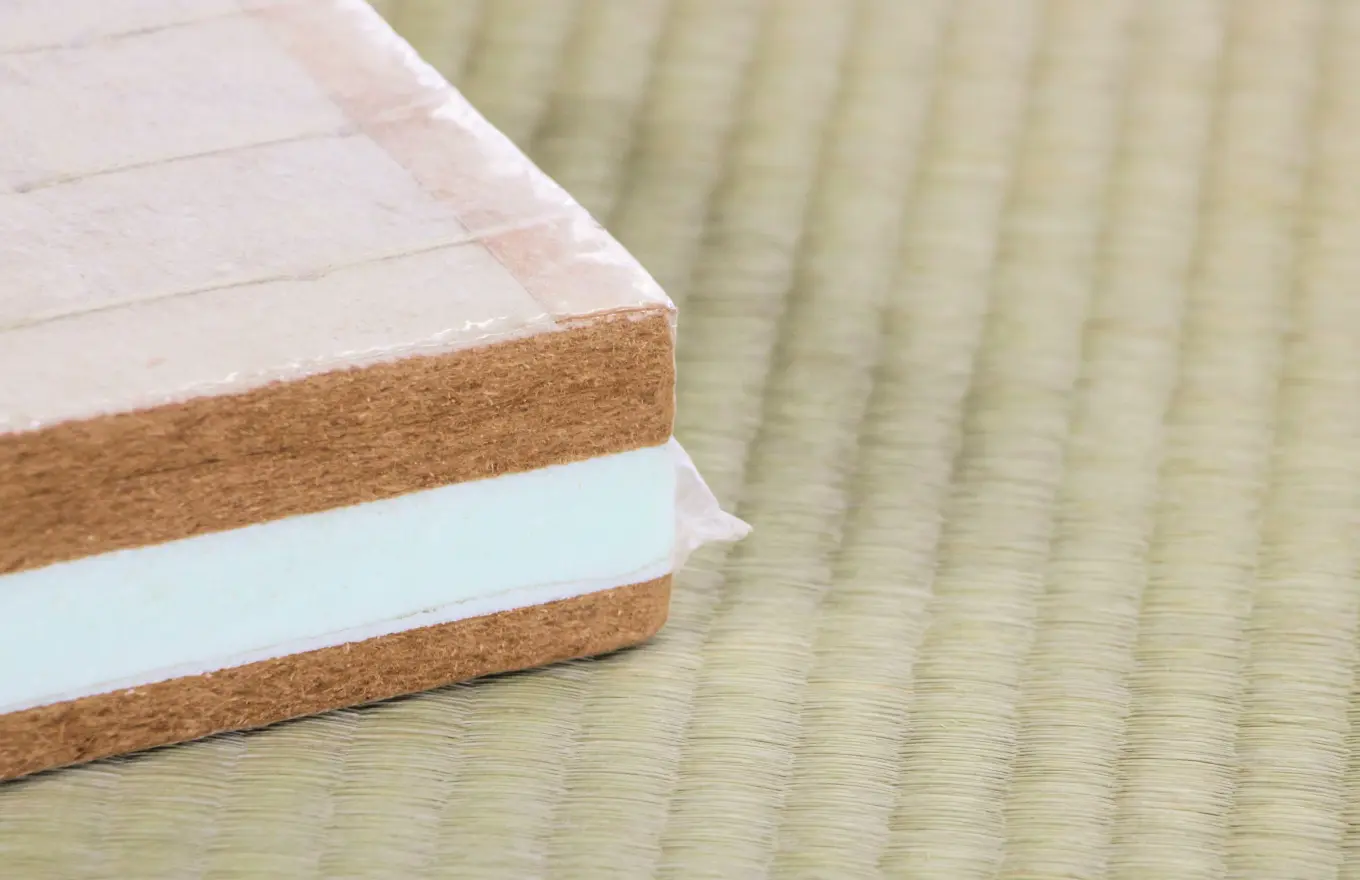
Inner part of a tatami mat (TOKO)
Tatami mat floor plays the most important function of tatami. Conventional tatami mats were made of rice straw,
but in recent years, new materials have been used in many cases because of the difficulty of obtaining the material,
difficulty in manufacturing, heavy and troublesome handling, easy breeding of insect pests such as mites, and easy mold
formation.
Tatami mats are made of insulation board made by compression molding wood chips or laminated with foamed
polystyrene, and are also called "building material tatami mats."
It has high moisture absorption, heat insulation,
and elasticity, and is less expensive and lighter than straw flooring
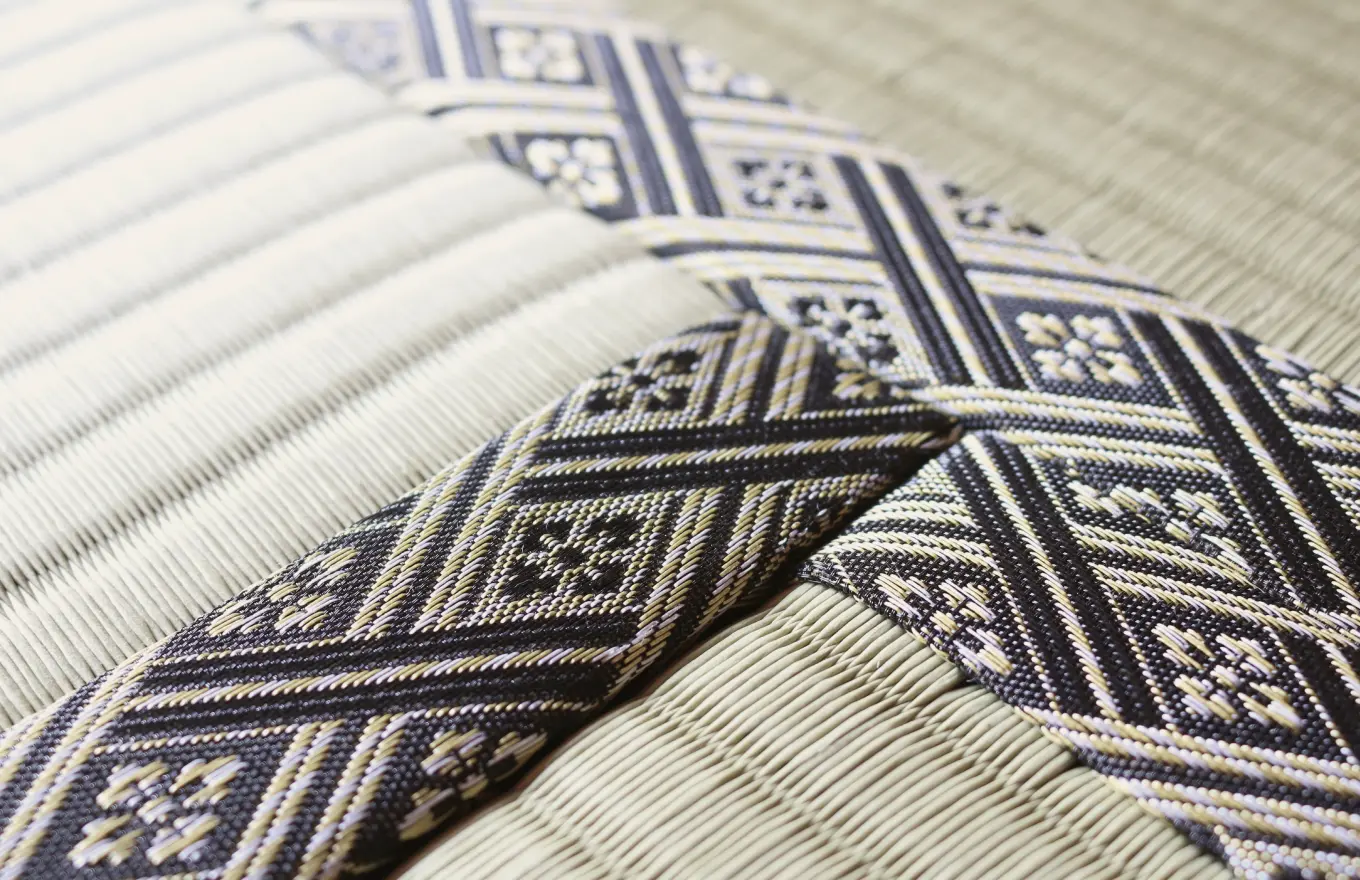
Edge of a tatami mat (HERI)
Generally, when wrapping tatami mats with tatami-omote, tatami-omote is wrapped around the tatami mat in the longitudinal
direction and sewn to the tatami mat on the reverse side, but in the transverse direction, tatami-omote is trimmed to match
the width of the tatami mat.
Since the tatami-omote is not fixed in place when left uncut, the cut edges are covered with
tatami mat edges and at the same time sewn to the tatami mat floor to stop the cutting. Tatami edges are made of chemical
fiber, cotton, linen, silk, and other materials and come in a variety of designs.
When wrapping the tatami floor with
tatami-omote, it is wrapped not only vertically but also horizontally, and sewn on the back side as if it were folded in,
resulting in edge-less tatami.